Civil Religion and Religious Toleration
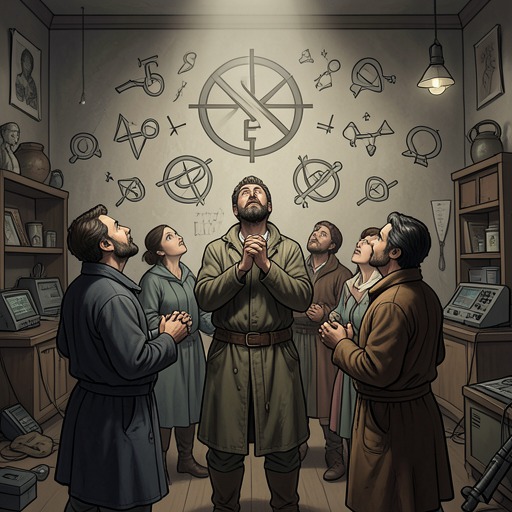
The Social ContractCivil Religion and Religious Toleration is Rousseau’s account of how a political community can recognize religion’s civic importance without making theological authority its own. The sovereign may require a small, public profession of civic sentiments, but its concern is limited to conduct and belief as they bear on duties to other citizens. The arrangement seeks to bind citizens to law and common life while denying any church the right to rule the state; its protection of toleration is therefore real but conditional, and its penalties reveal the coercive edge of that settlement.
Political Right and the Limits of Authority
Rousseau’s proposal belongs to a theory of political right, not a description of how existing states happen to operate. He distinguishes the principles that could make a society legitimate from the positive laws and institutions found in particular governments. Historical fact, in this method, cannot by itself establish a right: the issue is not merely what political societies do, but what can justify their authority. The discussion of religion accordingly begins from a question of legitimate jurisdiction, rather than treating inherited religious arrangements as self-validating.
That jurisdiction is bounded by the purpose of political association. The social compact is meant to unite people under a common force that protects each associate’s person and goods, while allowing each, in joining with all, to remain free. Its authority does not extend beyond public expediency. Religion comes within the sovereign’s concern because the community has an interest in citizens’ regard for duty; theological claims beyond their relation to morality and obligations toward others do not thereby become matters for state judgment.
Religion as a Civic Concern
Rousseau argues that a citizen should have a religion insofar as it can help make that citizen love duty. The state’s interest, however, is not in adjudicating the truth of every religious doctrine or managing the believer’s prospects in the next life. A person may hold other opinions without the sovereign taking cognizance of them, provided that the person is a good citizen in this life. This draws a line between civic consequences, which can concern the political community, and theological matters over which its authority has no claim.
The proposed civil profession of faith is therefore not presented as a complete theology. The sovereign fixes its articles as social sentiments considered necessary to being a good citizen and faithful subject, rather than as religious dogmas in the usual sense. Rousseau’s distinction is functional: the profession matters because it bears on attachment to justice, law, and civic duty. A community may establish that public standard, but cannot compel inward belief in it.
Articles, Toleration, and Sanctions
The articles of civil religion are to be few, simple, and exactly worded, without explanation or commentary. Their positive dogmas affirm a mighty, intelligent, and beneficent Divinity with foresight and providence; a life to come; the happiness of the just and punishment of the wicked; and the sanctity of the social contract and the laws. The list joins religious expectations to the civic order: its last article makes the compact and law objects of solemn regard, while the others establish a minimal shared profession concerning divine governance and moral consequence.
The sovereign cannot force anyone to believe these articles. It can, however, banish a person who rejects them, not for impiety as such, but on the stated ground that the person is antisocial and incapable of truly loving the laws and justice or, when necessary, sacrificing life to duty. A more extreme sanction applies to someone who has publicly recognized the dogmas and then behaves as though they are not believed: Rousseau prescribes death for this offense, which he treats as lying before the law. The distinction is between unbelief, which cannot be compelled away, and a public profession contradicted by conduct, which the doctrine treats as a crime against civic trust. The severe penalty makes the limits of toleration unmistakable: the civil creed is a narrow requirement, but not a merely optional one once openly professed.
Toleration is also built into the creed’s negative article. Rousseau rejects intolerance, and argues that civil and theological intolerance cannot be cleanly separated. If believers regard others as damned, he reasons, peaceful relations with them become impossible: love for those people would seem to conflict with love of the God believed to punish them, leaving conversion or torment as the alternatives. Once theological intolerance produces civil effects, priests become the real masters and kings merely their ministers. The danger is thus political as well as religious: a church’s claims can displace the sovereign’s authority in temporal affairs.
Conditions of Religious Pluralism
Because there can no longer be an exclusive national religion, Rousseau supports toleration for every religion that tolerates others and whose dogmas do not contradict the duties of citizenship. This is not unconditional liberty for every doctrine or institution. Its test is reciprocal tolerance and compatibility with civic obligations; private opinions outside those limits remain outside the sovereign’s concern, while doctrines that generate intolerance or oppose citizenship fall beyond the protection he proposes.
The doctrine that “Outside the Church is no salvation” marks the decisive limit. Whoever dares to affirm it should be driven from the state unless the state is itself the church and its prince the pontiff. The proposition is therefore suited only to theocracy; in any other form of government it is fatal, because it denies the possibility of legitimate religious life beyond one church and invites religious authority to govern civil membership. Rousseau invokes the reason Henry IV is said to have embraced the Roman religion as one that ought to make an honest person leave it, and still more ought to persuade a reasoning prince to do so.
The State’s Independent Ground
Rousseau’s conclusion places the argument within the larger project of grounding the state in political right. The civil profession is intended to strengthen a political community whose legitimacy rests on its own basis, not on the authority of an exclusive national church. Religious sentiment may help sustain duty, but the state’s right to govern does not derive from theology, and it cannot claim authority over the next world. The distinction is essential to the proposal: civic religion can support law, yet the sovereign must remain sovereign in temporal affairs.
The argument closes by recognizing the limits of its scope. Having laid down principles of political right and sought an independent foundation for the state, Rousseau identifies external relations—including the law of nations, commerce, war and conquest, public right, leagues, negotiations, and treaties—as subjects too extensive for the work’s narrow bounds. Civil religion is thus a final internal question in the account of the political community: it addresses how common civic commitments might be secured, while leaving the broader relations of states for another inquiry.